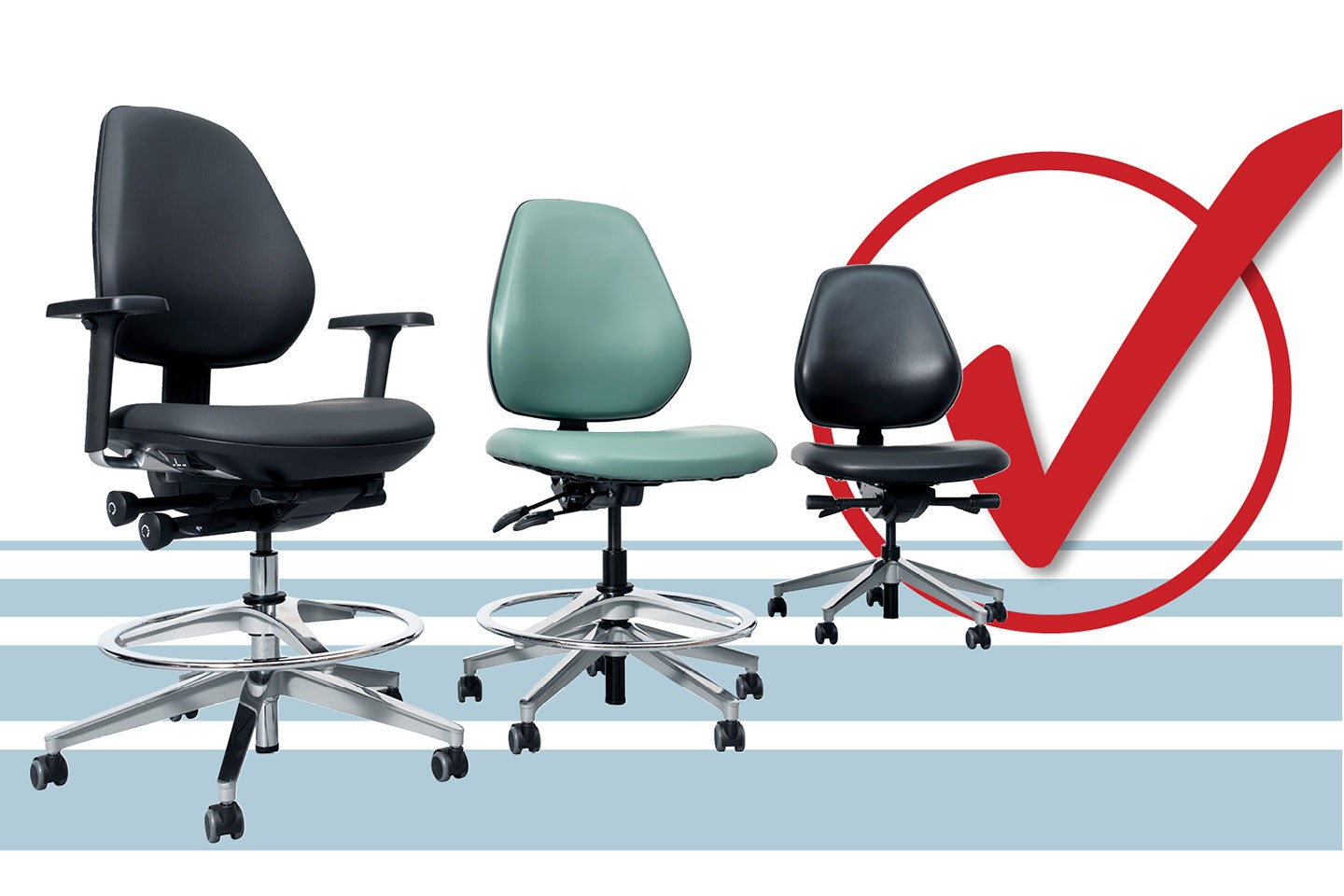
The best of the best in the ergonomics trade tend to know about one another. Respect among peers is a big thing even it doesn’t come outright.
That’s understandable. Nobody wants to give away the gameplan by name.
Yet, recently BioFit had the chance to hear from an industry pro (a certified ergonomic specialist) who runs his own ergonomic consulting company on the West Coast, beyond our established distribution circles. His praise for what we do echoed in what he’s found to be standout qualities of his own partners and of what he sees as the real value of being a “human-centered” provider of ergonomic seating.
Setting the table for a sit-down
With an extensive background in environmental health and safety for a leading nonprofit organization, and the better part of decade spent in loss control, risk management, and employee safety in the fields of education and insurance services, this entrepreneur chose to channel his experience into the launch of his own effort in mid-2023. From this platform, he provides ergonomic consulting independently of any manufacturer and evaluates products based on human-design principles, not brand affiliation.
BioFit thanks him for being gracious with his time in fielding questions and generous with his contributions to the following blog series. Here in part one, he sets the table for what he sees in BioFit as an all-pro seating manufacturer.
Quality ergonomics is never a 50/50 proposition.
BioFit’s place among the top tier in ergonomic seating is secure, but he was quick to point out that kind of standing isn’t commonplace, noting many undercut the importance of human-centered design in creating high-quality chairs for people at the higher and lower ends of the scale.
“Too often, companies don’t look at that 5th or 95th percentile, they’ll look at aiming right at the 50th percentile when stocking a chair so it fits the vast majority of people,” he said. “However, when you look at injuries in the workplace, it’s at both the higher and lower extreme where the most accidents occur. Sometimes that’s someone with a stature of 4’ 11’’; other times, it can be represent a hazard to those weighing over 250 lbs.”
That tells him that BioFit pays very close attention to BIFMA guidelines.
“Not just that the seat back or seat pan is made a certain way, but that BioFit has really looked to expand from that 50th percentile in ways that prevent injuries and insurance claims on the job across the spectrum—a bit of ‘prevent defense,’ if you will, that doesn’t cost you on the scoreboard.”
Common shortcomings of common retailers
No surprise that he has little good to say about offerings from the big box stores. “Cheap materials” and “lack of adjustability” are the first things that came to mind as he rattled off how he might sit down to do an 18-point check on a chair.
“I’ll start by checking the memory foam for retention, the cylinder for pneumatic pressure, and the lumbar support to make sure it’s still active and works accordingly, and all these things, but at the end of the day, it goes back to being human-centered. You’re just not going to find that in the office supply warehouses and strip malls of the world.”
The science behind the design
“It’s a complicated process, and there are engineers working for the best manufacturers who design using anthropometrics, the science behind it,” he said. “But to truly design a chair being human-centered, you need to tear that chair apart, and you can’t look at it as one whole component or what makes it look pretty.”
In part two of this blog series, look for topics such as ergonomic assessment methodology, what makes a valuable ergonomic furnishings investment, the testing process, product warranties, customer service, and much more.
BioFit encourages you to begin a dialogue with us. Start by leaving a comment here. Let us know what you think of this series, and if you’d like to read more thoughts from other pros in the industry. Thank you for reading.